
This week, I gave myself permission to have a slow day.
No agenda. No timetable. Just space.
As I sat with my journal and a cup of coffee, a simple question surfaced:
What if I stopped watching the clock? (video is found below)
Not forever.
Just for today.
It’s amazing how much of life is dictated by time. We eat because it’s noon. We write because it’s on the calendar. We rush because the next thing is waiting.
Some days I wonder if I’m following the clock more faithfully than I’m following the gentle rhythms God built into me.
So I made a little list.
Eat when I’m hungry.
Write when creativity arrives.
Knit just because.
Sit outside for a while.
Watch one of my favourite YouTube creators.
Record something simply because I have something to share.
Nothing extraordinary.
Nothing that would earn a gold star for productivity.
Yet somehow, everything on that list felt like life.
When Control Stops Serving Us
I’ve realized I spend a lot of energy trying to manage every detail of my day.
If everything goes according to plan, I feel successful.
If it doesn’t, I quietly convince myself I’ve somehow fallen behind.
That’s exhausting.
More importantly, it isn’t who I want to become.
There is wisdom in planning. I don’t believe slow living means living carelessly.
But I’ve also learned that a tightly controlled life can leave very little room for surprise, delight, or the quiet nudges of the Holy Spirit.
Sometimes the most meaningful moments aren’t scheduled.
They’re noticed.
Right the Ship
This summer I’ve been living with a simple phrase:
Right the Ship.
It began as a reminder to care for my health.
But it’s becoming much more than that.
It’s about aligning my life with what truly matters.
It’s choosing presence over pressure.
Rhythm over hurry.
Grace over guilt.
Little by little, I can feel the ship beginning to steady.
Not because I’ve created the perfect routine.
But because I’m learning to loosen my grip on the clock.
A Question for You
So I’ll leave you with the same question that found me that quiet morning.
What if you stopped watching the clock… just for today?
What would you notice?
What joy have you been rushing past?
Perhaps the most important thing waiting for us isn’t another task.
Perhaps it’s simply the next moment.
I’d love to hear from you.
If you gave yourself one day without constantly checking the time, what would you do? I’d enjoy reading your thoughts in the comments. 🌿
There is something about the last week of a holiday.
It doesn’t announce itself. It slips in quietly, almost unnoticed, like the afternoon shadows stretching across the yard while the kettle hums in the kitchen.
A couple of weeks ago I wrote about choosing a holiday at home rather than feeling disappointed that our camping trip had ended. I decided to treat these weeks as a gift instead of simply waiting for life to return to normal.
I have to tell you, dear friends…
It worked.
I’ve rested more deeply than I expected. I’ve found joy in ordinary days. And perhaps most importantly, I’ve remembered that a simple life can also be a rich one.
Looking Back
This past week was filled with the kinds of moments that rarely make headlines, yet somehow fill the heart.
There were slow mornings with my journal, a candle flickering beside my coffee.
Afternoons at the spinning wheel with the windows open, the gentle rhythm of the treadles keeping time while the birds sang outside.
A few more rows added to my sweater.
A visit to the local farm stand where, quite naturally, I came home with far more tomatoes than we needed—and not one regret.
A refreshing swim on one of those hot July afternoons when the cool water washes away every busy thought.
And yes… an hour wandering through a thrift shop with no shopping list, no deadline, and nowhere else I needed to be. I came home with a treasure or two, but more importantly, I came home smiling.
None of these moments were extraordinary.
Yet together they became something beautiful.
I found myself quietly thanking God for the gift of ordinary days.
The Last Week
Now I’ve reached the final week before ministry, meetings, and familiar routines begin again.
I know myself well enough to recognize the temptation.
I start thinking about everything I should squeeze in before the holiday ends. One more project. One more outing. One more task crossed off the list.
But perhaps that’s not what this last week is for.
Perhaps these final days are meant to be lived just like the first ones.
Slowly.
Gently.
With open hands.
So instead of asking,
“What do I still have to get done?”
I’m asking a different question.
“What do I want to carry with me into the busy days ahead?”
Not another to-do list.
Not another obligation.
But a few quiet rhythms that help me remember who I am.
What I’m Carrying Forward
There are a few gifts from these weeks that I hope don’t get packed away with the camping gear.
Morning journaling, even if it’s only five quiet minutes.
Time at my spinning wheel—not because I have to finish a project, but because it steadies my heart.
The reminder that rest isn’t something we earn after we’ve worked hard enough. Rest is one of God’s good gifts.
And perhaps an occasional afternoon wandering through a thrift shop, simply because it’s good for the soul.
Maybe that’s the real gift of a holiday at home.
Not the holiday itself.
But the gentle habits that quietly settle into our lives and decide to stay.
A Gentle Question
As July comes to a close, perhaps you’ve had a holiday away, a holiday at home, or maybe no holiday at all.
I’d love to ask you a simple question.
What is one small thing from these summer days that you’d like to carry into the months ahead?
Sometimes simply naming it is enough to help it take root.
Thank you for sharing this little corner of summer with me.
Until next time…
Grannie Doll
Finding grace in ordinary days, one quiet moment at a time.
Not in the “What’s in style?” sort of way, but in a quieter, more thoughtful way.
What if we simply paused?
What if, before buying another sweater, another pair of jeans, or another shirt, we slowed down long enough to look at what we already own?
As Katrina Rodabaugh writes, “If we could just pause our shopping habits, slow down our consumption, pay attention to the clothes we bring into our homes, we’d collectively make a huge shift.”
That idea has stayed with me.
Progress, Not Perfection
This isn’t about never buying anything again.
It’s about making thoughtful choices.
Perhaps we ask ourselves:
Do I really need this?
Do I truly love it?
Will I actually wear it?
Simple questions. Honest answers.
Slow fashion isn’t built on perfection. It’s built on paying attention.
As with so much in life, we simply start where we are.
Pause
One idea I’m considering is a fashion fast.
Maybe thirty days.
Maybe three months.
Maybe even a year of intentionally avoiding unnecessary purchases.
Not as a punishment—but as an opportunity to notice what I already have.
Sometimes enough has been sitting quietly in the closet all along.
Assess
I’ve also been thinking about creating a personal uniform.
Not identical outfits every day, but understanding what I genuinely enjoy wearing.
What pieces make me feel comfortable?
What colours do I reach for?
Where are the gaps that truly need filling?
Knowing this makes shopping far less impulsive.
Organize
Before bringing anything new home, it helps to sort what is already here.
Keep. Donate. Maybe.
And then ask another question:
Can this be repaired? Repurposed? Dyed a new colour? Turned into patchwork?
A worn shirt may become quilt squares. A faded linen dress might find new life in a dye pot. A sweater with a tiny hole might simply need ten minutes with a needle and thread.
There is something deeply hopeful about giving things another chance.
Gather Inspiration
I enjoy noticing what other people wear—not to copy them, but to better understand my own style.
Pinterest boards. Magazine clippings. Walking through town.
Watching how people layer clothing in every season. Slowly a picture begins to emerge of what feels authentic.
Learn
Visible mending. Natural dyeing. Ethical brands made in Canada. (or where ever you live)
Where to donate. Where textiles can be recycled.
There is always something new to learn, and every new skill makes us a little less dependent on buying our way through life.
Perhaps I need to host a little dye day with friends. A pot simmering on the stove, well-loved garments waiting for fresh colour, laughter around the table. That sounds like a lovely afternoon to me.
Care
One of the simplest lessons?
Wash our clothes less. Care for them gently. Hang them to dry. Treat them like companions rather than disposable products.
The clothes that serve us well deserve our gratitude.
Create Boundaries
I’ve also begun asking myself:
What am I willing to splurge on?
And just as importantly:
Where will I happily save money?
Sometimes buying one beautiful, well-made garment that will last ten years is wiser than buying five inexpensive ones that won’t last a season. Thoughtful spending isn’t about deprivation. It’s about stewardship.
Connection
Perhaps this is the part that matters most.
Slow fashion isn’t really about clothing. It’s about connection. Connection to the people who made our clothes.
Connection to the materials. Connection to our own values. Connection to the earth.
For me, this fits beautifully alongside my 100 Mile Life journey.
Small Circles. Deep Roots.
Repair. Repurpose. Remember.
Those three words feel almost spiritual.
Because every stitch we mend, every garment we rescue, every thoughtful purchase we make reminds us that abundance isn’t found in having more.
It’s found in caring more deeply for what we already have.
So today, before clicking “Add to Cart,” perhaps we’ll simply pause.
We might discover that the richest wardrobe isn’t the biggest one.
It’s the one that tells the story of a life lived with intention.
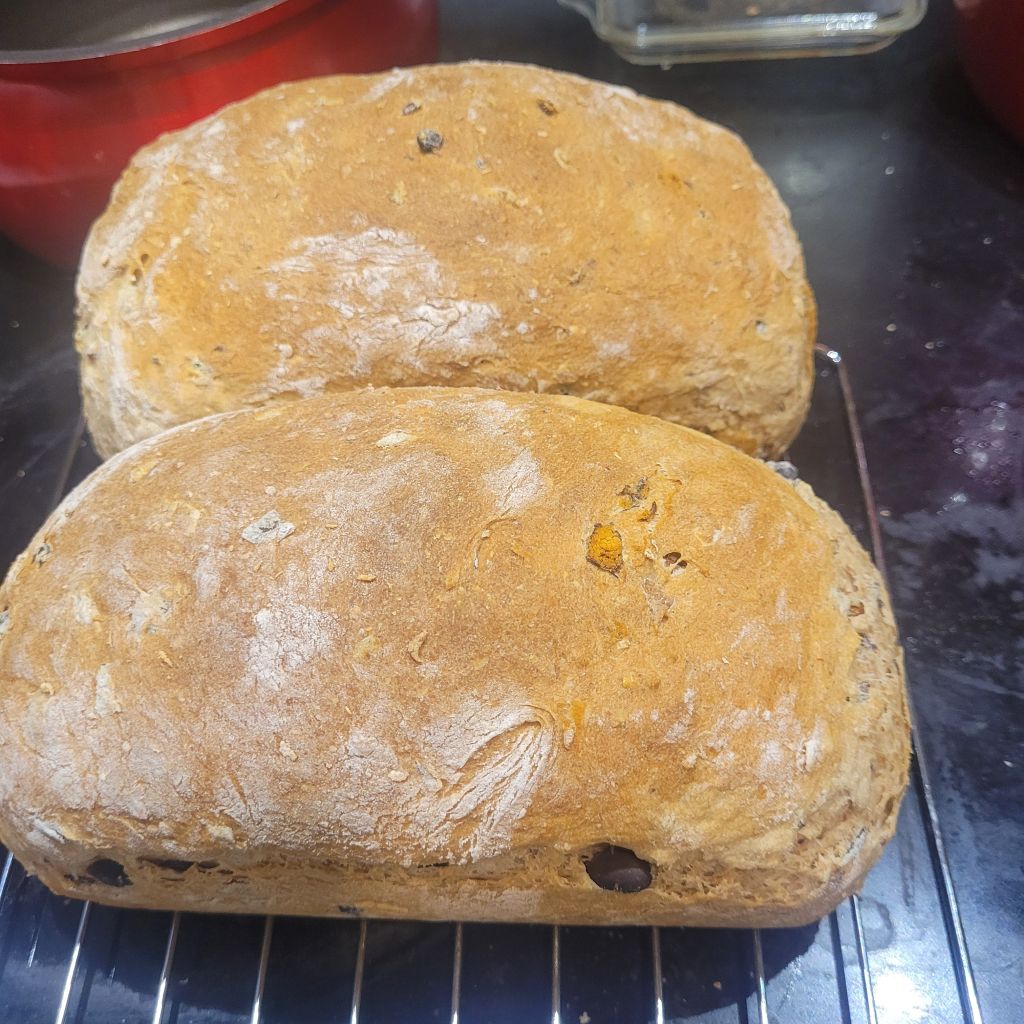
Yesterday I mixed bread using unfed sourdough starter and just a wee bit of yeast.
It was a new recipe for me, and if I’m honest, I wasn’t entirely sure how it would turn out. I usually don’t stray too far from recipes that have served me well. If something works, I tend to keep doing it.
Perhaps that’s true in more than just my baking.
A few hours later, the reward sat cooling on the counter: two small loaves with beautifully golden tops and a soft, tender crumb. The experiment had worked.
As I sliced into the first loaf, I found myself wondering how often I live the same way I bake.
I tend to stay in familiar lanes. I keep comfortable habits. I follow well-worn routines.
There’s comfort in that. Familiar rhythms have carried me through many seasons of life.
But yesterday reminded me that sometimes a small change opens the door to something unexpectedly wonderful.
Earlier that morning, I had intentionally changed my usual routine. Nothing dramatic—just enough to step outside my normal pattern. And do you know what happened?
The world didn’t fall apart.
In fact, the day unfolded beautifully.
Perhaps growth doesn’t always require a complete reinvention. Sometimes it begins with something as simple as trying a different recipe, taking another road home, rearranging the morning, or saying yes to something we’ve quietly been wondering about.
Not every experiment will become a favourite. Some recipes fail. Some ideas don’t fit.
But every now and then, we discover a new loaf worth baking again.
So today I’m asking myself—and perhaps you as well:
Will you change course today?
Maybe you’ll bake something new. Maybe you’ll take a walk along a different path. Maybe you’ll sit in a different chair with your morning coffee. Or perhaps you’ll simply give yourself permission to try life a little differently.
I’d love to hear what small change you’re making today.
Coming home from the campground always feels a little bittersweet. The trailer is unpacked, the laundry is folded, and suddenly it can feel as though the holiday is over.
But is it?
This year I still have two weeks of vacation ahead of me, and I’m choosing to think about them a little differently. Rather than wishing I were still away, I’m inviting myself into a holiday at home.
After all, rest isn’t really about where we are. It’s about how we choose to be present.
The days don’t need to be filled with big adventures. They can be anchored by simple rhythms that help my heart settle. A slow cup of coffee in the morning. A few quiet pages in my journal. Time at my spinning wheel or knitting a few rows on my sweater. A swim on a warm afternoon. Perhaps a visit to a local farm stand or an hour wandering through a thrift shop with no particular goal in mind.
These aren’t chores. They’re invitations.
I’m learning that vacations don’t have to be busy to be meaningful. In fact, the older I get, the more I treasure the ordinary moments that become extraordinary simply because I slow down enough to notice them.
Instead of making a long list of things to accomplish, I’m asking myself a different question:
What would make today feel restful?
That question changes everything.
Maybe it means baking a loaf of bread. Maybe it means sitting outside with a candle as evening settles in. Maybe it means spinning for half an hour while listening to the birds. Maybe it simply means taking care of my health with gratitude and gentleness.
I’m beginning to think that the best souvenirs aren’t things we buy while travelling.
They’re moments we collect.
A finished skein of yarn.
Blueberry-stained fingers.
The smell of fresh bread.
A quiet prayer.
A chapter of a good book.
A gentle walk.
A laugh shared with family.
These are the treasures I want to carry with me long after vacation ends.
So for these next two weeks, I’m not chasing productivity.
I’m collecting moments.
And perhaps that’s the most restful holiday of all.
What small moment could you collect today that your future self will remember with gratitude?
The trailer is unpacked. Laundry is slowly finding its way back into drawers. The familiar mug is filled with coffee once again, and my knitting basket waits patiently beside my chair. After days away, it feels good to settle back into the rhythms that quietly shape my life.
My travelling spinning basket.
And waiting for me, as if it had never left, is Tour de Fleece.
For many people, Tour de Fleece is about spinning as much yarn as possible while the cyclists race across France. There are certainly goals to meet and challenges to enjoy. But over the years, I’ve discovered something even more valuable.
It’s about showing up.
One spindle. One bobbin. One row of knitting. One peaceful afternoon.
Each turn of the wheel and spindle reminds me that beautiful things are rarely rushed.
As I spin, I find myself thinking less about productivity and more about presence. The yarn will eventually become socks, a sweater, or perhaps something I haven’t yet imagined. But right now, the finished object isn’t the point.
The making is.
The quiet rhythm of fibre slipping through my fingers steadies my thoughts. Knitting settles into the background like an old hymn. My breathing slows. My shoulders relax. These simple handmade moments become a kind of gentle prayer.
I’m also reminded that I don’t need new supplies or the next exciting project to feel inspired. There is deep contentment in opening the baskets I already own, rediscovering forgotten skeins, returning to unfinished projects, and simply enjoying what is already here.
Slow is enough.
This season, I’m choosing to celebrate the process more than the product. To spin because it brings joy. To knit because it calms my heart. To share the journey because community makes even solitary crafts feel wonderfully connected.
So if you’re joining me for Tour de Fleece this year, welcome. Whether you spin for five minutes or five hours, whether you’re working with a wheel, a spindle, knitting needles, or simply cheering others on, there’s a place for you here.
There’s a question that’s been wandering around my mind lately.
Do I actually read?
The honest answer is… not very often.
When I do pick up a book, it’s rarely fiction. Most often it’s something that teaches me, encourages me, or helps me prepare for ministry. But simply reading for the joy of reading? That has somehow slipped quietly into the background.
I’ve been asking myself why.
It’s not that I don’t like books. I do.
It’s just that, given the choice, I’d almost always reach for my knitting needles or my spinning wheel instead.
The rhythm of yarn moving through my fingers settles something deep inside me. A sock grows one round at a time. A spindle fills. A bobbin becomes yarn. My hands are busy, and somehow my mind becomes still.
So perhaps the question isn’t, “Why don’t I read?”
Perhaps the better question is:
Can I read and knit at the same time?
Audiobooks immediately came to mind.
What if stories could accompany my stitches?
What if my knitting became the gentle rhythm beneath someone else’s words?
It feels less like trying to squeeze another hobby into an already full life and more like inviting two old friends to sit together over a cup of tea.
I’m not setting a goal to read fifty books this year.
I’m simply curious.
Maybe I’ll borrow an audiobook from the library. Maybe I’ll knit a few rows while listening. Maybe I’ll discover that stories and stitches belong together after all.
And if they do, perhaps I’ll have found another quiet corner of this slow life I’m trying to cultivate.
Sometimes we don’t need a complete change of direction.
Sometimes we simply need to ask a different question.
Until next time,
Grannie Doll ☕🧶
May your tea stay warm, your stitches stay steady, and may you always find room for one more good story.
There is something deeply comforting about the rhythm of a spinning wheel.
As I sit and spin, my heart begins to keep time with the turning spindle, with the gentle treadling of the wheel. Before long, I notice my breathing has slowed. My thoughts have softened. The hurry of the day begins to slip away.
Soft fibres in countless blends pass through my fingers. Wool from one farm, perhaps alpaca from another, a touch of silk or bamboo. Each fibre brings its own personality, yet together they become something entirely new.
As I spin, I find myself wondering.
What will this yarn become?
Will it become a pair of warm socks for winter? A shawl wrapped around someone’s shoulders? A sweater worn on cool autumn mornings? Will it be beautiful? Will it be useful? Will it bring comfort to another pair of hands?
Those are lovely questions.
But they are no longer the most important ones.
Somewhere along the way I realized that spinning was never just about making yarn. The true gift is what happens while the wheel turns.
The process changes me.
As the fibre drafts through my fingers, I dream. I pray. I remember. I give thanks.
Even on difficult days—days when my head aches, when worries creep in, or when life feels uncertain—the steady rhythm of the wheel reminds me that peace doesn’t always arrive in dramatic ways. Sometimes it comes one treadle at a time.
One draw.
One twist.
One quiet moment after another.
The yarn grows almost unnoticed, just as our lives do.
We often ask ourselves, What comes next?
It’s a question we carry through every season of life. What comes after retirement? After the children leave home? After grief? After illness? After success? After disappointment?
The truth is, we rarely know.
And perhaps we don’t need to.
The wheel teaches me that I don’t have to see the finished skein before I begin. I simply need to trust the next draft of fibre, the next turn of the wheel, the next quiet breath.
What comes next will come.
Today is enough.
Today I will spin.
Today I will breathe.
Today I will give thanks for these ordinary moments that quietly become an extraordinary life.
The wheel keeps turning.
By the grace of God, so do I.
A Gentle Invitation
What simple rhythm has been steadying your heart lately?
Perhaps it’s knitting, gardening, baking bread, walking at sunrise, or simply sitting quietly with a cup of tea.
I’d love to hear what helps you find peace as your own wheel keeps turning.
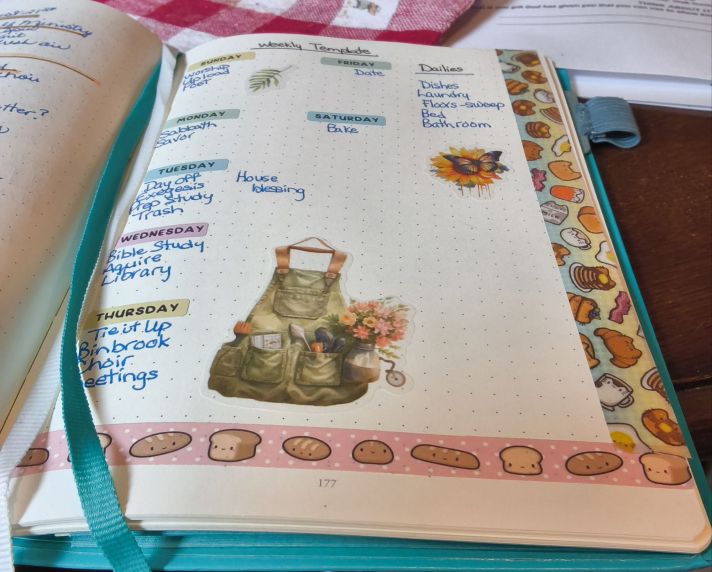
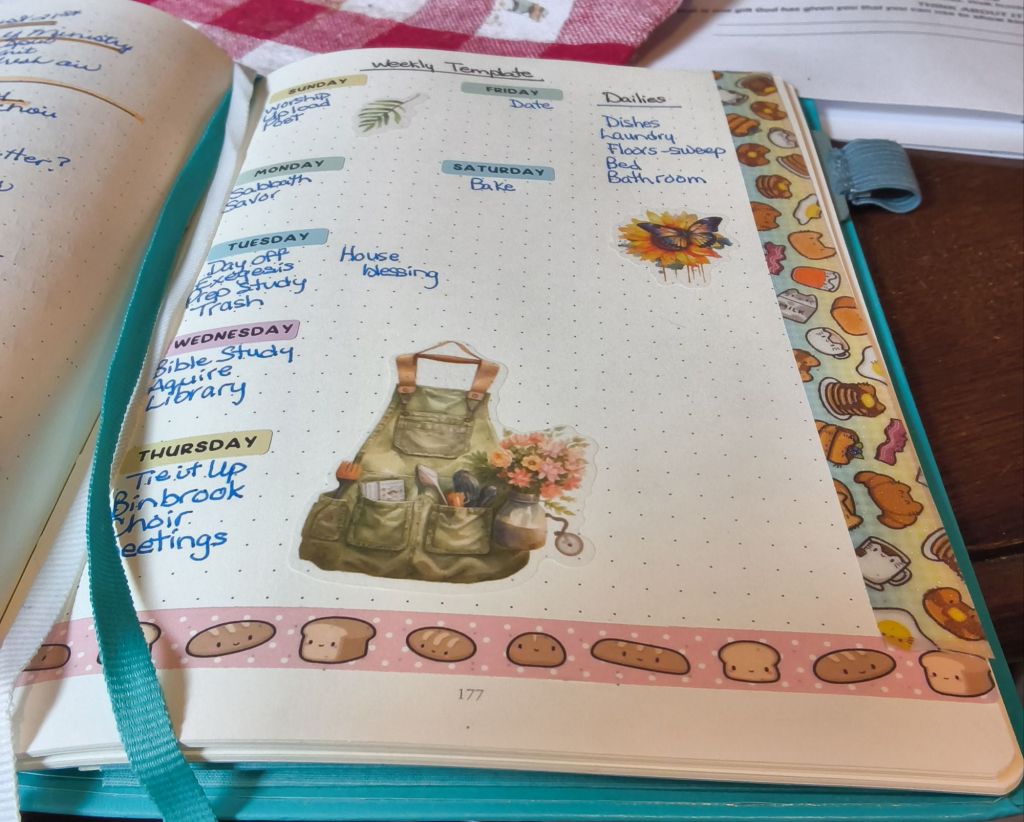
The day begins the way it often does—with my journal, recording my personal stats, and a slow cup of coffee. I map out the week ahead, breathe deeply, and let the calm of the morning settle over me.
After a quick kitchen tidy on this third day of Tour de Fleece, I settle at my spinning wheel with a protein smoothie close by. There’s nothing pressing today. No urgent tasks demanding my attention. Just the quiet hum of the wheel, a few favourite YouTubers keeping me company, and the simple joy of creating.
Sometimes the greatest gift is an unhurried day. A day to breathe, to spin, to be thankful.
I hope your day unfolds with a little peace, a little purpose, and moments that remind you to slow down. Blessings on your Monday.
— Grannie Doll Spinning grace, one peaceful day at a time.
Pip: Tour de Fleece is upon us — the one athletic event where the training plan includes a die roll and a cup of tea.
Mara: Barbara (Doll) Creelman has been writing about exactly that: how to prepare for Tour de Fleece with intention, what the event is really building beneath the surface, and how July itself becomes a season worth tending. Let's start with the preparation side of things.
Tour de Fleece: Showing Up One Spin at a Time
Pip: The question at the heart of Tour de Fleece prep isn't what fibre to spin or which wheel to use — it's how you build a daily habit that actually holds when motivation is thin and the bobbin is empty.
Mara: The five-step framework in "Let's Get Ready for Tour de Fleece" starts before the fibre even comes out. The framing is direct: "It isn't about spinning the most yarn or owning the fanciest wheel. It's about showing up, building a habit, and enjoying the journey one length of fibre at a time."
Pip: So the whole architecture is about removing the pressure that makes people skip a day — and that shapes every step that follows.
Mara: Exactly that. Hydration comes first — water beside the wheel as a cue to care for the spinner, not just the spinning. Then a timer, sometimes just twenty or thirty minutes, which the post describes as replacing guilt with consistency.
Pip: The die roll is the one that earns its keep. Six outcomes — different fibre, different spindle, a wheel session, plying, sampling, carding — and the decision is already made for you.
Mara: The post calls it removing decision fatigue, and the framing is generous: "Sometimes creativity just needs permission to play." Steps four and five round it out — choosing today's spindle deliberately, and then letting process be enough. Celebrate the uneven yarn, the small victories, simply showing up.
Pip: Which is a harder instruction than it sounds, for the people who keep a spreadsheet on their yardage.
Mara: The second post, "What Are We Really Building During Tour de Fleece," takes that same spirit and zooms out. It argues the real product isn't yarn at all — it's community. Spinners who may never meet face to face, cheering each other through tangles and broken singles, connected by a shared rhythm across time zones.
Pip: Spinning is described there as quiet and solitary by nature, which makes the community angle feel earned rather than promotional.
Mara: That tension is the whole point of the piece. The craft is solo; the event makes it collective. And that's the ground the July newsletter picks up on too — which is where we're headed next.
July: Steadying the Ship
Pip: If Tour de Fleece is the event, July is the container — and the July Newsletter frames the whole month as a season of intention rather than acceleration.
Mara: The newsletter opens with a quiet declaration: "Steady the ship. Tend the roots. Enjoy the journey." Not a productivity manifesto — more a permission slip. July's longer days and open windows become an invitation to return to small practices that make life feel rooted.
Pip: Socks, a sweater, English Paper Piecing, local shopping, bread baking, walking — the list reads less like a to-do and more like a description of a life already in motion.
Mara: That's the 100 Mile Life thread running through it. Living locally reframed not as restriction but as relationship — knowing where food comes from, supporting neighbours, finding abundance close to home.
Pip: Habit, community, rootedness — it all points the same direction: slow down enough to notice what's already there.
Mara: Worth sitting with as the Tour gets underway. We'll be back with more from Doll Can Create soon.